Solar Energy Production and Electric Vehicle Project
By replacing the generation of electricity with solar energy, E-470’s efforts alone will stop the production of 24,000 metric tons of carbon dioxide (CO2) emissions over 20 years. We began the E-470 Solar Project in 2012 with the goal of eliminating the need for imported oil to be used in the conventional generation of electricity. In 2021, E-470 Public Highway Authority purchased all solar generating facilities on Authority property and now offsets an average of 44% of total energy cost on a yearly basis.
In 2017, we launched another green initiative with our Electric Vehicle Project. At E-470, we’re demonstrating our commitment to sustainability and providing green options to customers, employees, and our community. In 2022, we upgraded the vehicle charging stations with two ChargePoint Express 250 high-power DC chargers. The Authority is proud to continue to offer free charging at these stations to customers, employees, and the community.
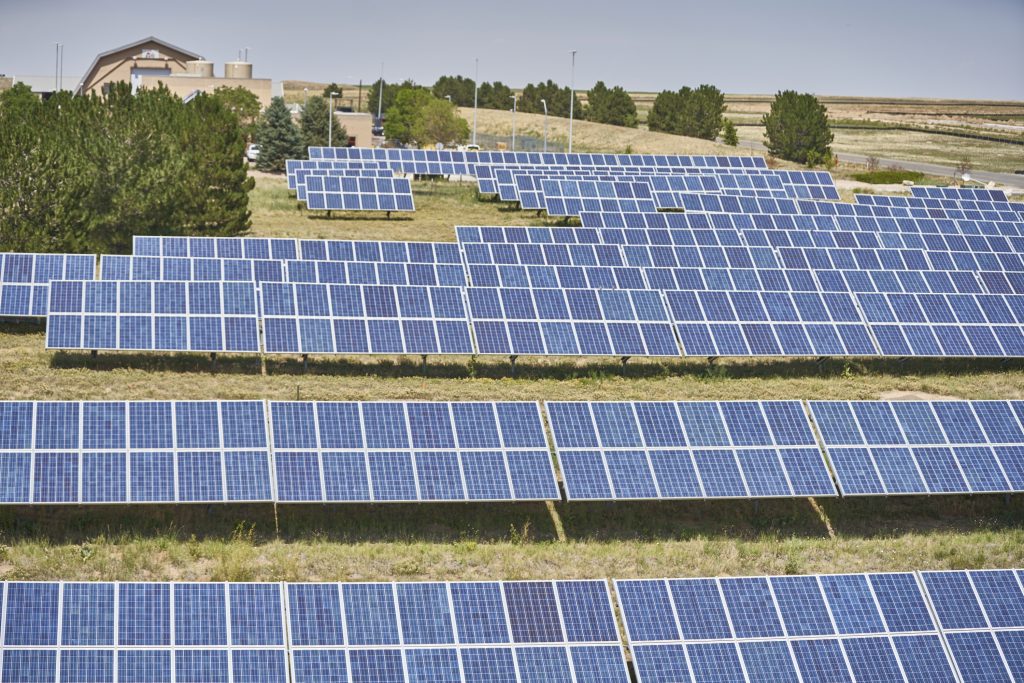
Since December 2012, we have produced over 12 million kWh of solar energy, enough to cancel out 6,000,000 vehicle miles traveled. The highest producing areas are the arrays at the 6th Pkwy./Stephen D. Hogan Pkwy. and Colfax Ave. ramps.
Solar Project By the Numbers
0
solar arrays
0
years energy production
0
million total kWh solar energy produced
0
ramps with solar arrays
E-470’s Electric Vehicle Project
E-470 offers free electric vehicle fast charging at our Aurora headquarters (22470 E. Stephen D. Hogan Parkway). The four Chargepoint stations can charge most EVs to 80% in about 30 minutes and include CHAdeMO and SAE combo plugs. Find the chargers in the northwest corner of our parking lot—just sign up with ChargePoint to start charging today!
E-470’s Role in Protecting Local Waterways
E-470 helps keep the Cherry Creek and Barr Milton Watersheds clean through a Municipal Separate Stormwater Permit (MS4) with the Colorado Department of Public Health and Environment, renewed through 2026. This permit supports recreational use and aquatic life in Colorado by managing stormwater runoff along the E-470 corridor. The Authority educates customers about reducing pollutants like trash, motor vehicle fluids, sediment, fertilizers, and pet waste that can enter waterways during rain or snow. E-470 also uses spot spraying to minimize herbicide use and prevent chemicals from reaching local waterways.
Keep Roadways Clean: No Littering or Illegal Dumping
Throwing trash or debris on public or private property without permission is illegal dumping, prohibited on and around E-470 with fines up to $500. If you see someone illegally dumping, call E-470 Roadside Assistance at (303) 537-3400 anytime, 24/7. The team proactively removes litter and debris to keep travel lanes clear and prevent pollution from reaching waterways.
Secure Your Load and Maintain Your Vehicle
Unsecured loads cause about 80% of roadway debris—make sure nothing can slide, shift, fall, or become airborne while driving. Vehicle fluids that leak onto the road wash into storm drains and waterways when it rains or snows. Fix leaks immediately, and use a drip pan or kitty litter to catch drips until repairs are made. Never wash away oil or fluids with water. Recycle leftover paint for free at PaintCare drop-off locations—find one at paintcare.org or call 1-855-724-6809.
Reduce Nutrient Pollution
Excess nutrients like phosphorous and nitrogen from fertilizers, herbicides, pesticides, and pet waste are major stormwater pollutants affecting Cherry Creek, Barr Lake, and Milton Reservoirs. Too many nutrients cause algae overgrowth, which depletes oxygen levels and harms fish and aquatic life, creates green scum and odors, and can pose public health risks. Learn how to reduce nutrient runoff by viewing brochures from E-470, the Barr Milton Watershed Association, Colorado Stormwater Council, and Arapahoe County SPLASH. E-470 partners with these organizations to educate the public on improving water quality.
Who Can Use It?
Electric vehicles outfitted with a DC fast charge port can utilize these charging units. including: BMW i3; Chevy Bolt EV; Chevy Spark EV; Kia Soul EV; Mitsubishi i-Mi EV; Nissan LEAF; Volkswagen eGolf; Tesla (requires a CHAdeMO adapter; please note you may need to adjust the amps down to a lower level in your vehicle’s settings in order for the unit to charge your vehicle).
E-470 Water Quality FAQs
0
linear miles cleaned
0
hours of labor
0
thousand bags of trash collected
0
large items removed
While our teams did an amazing job cleaning up along the roadway, we still need E-470 commuters to do their part in keeping Colorado beautiful! Avoid littering, intentionally or unintentionally, by keeping trash inside your vehicle and properly securing anything you transport.